
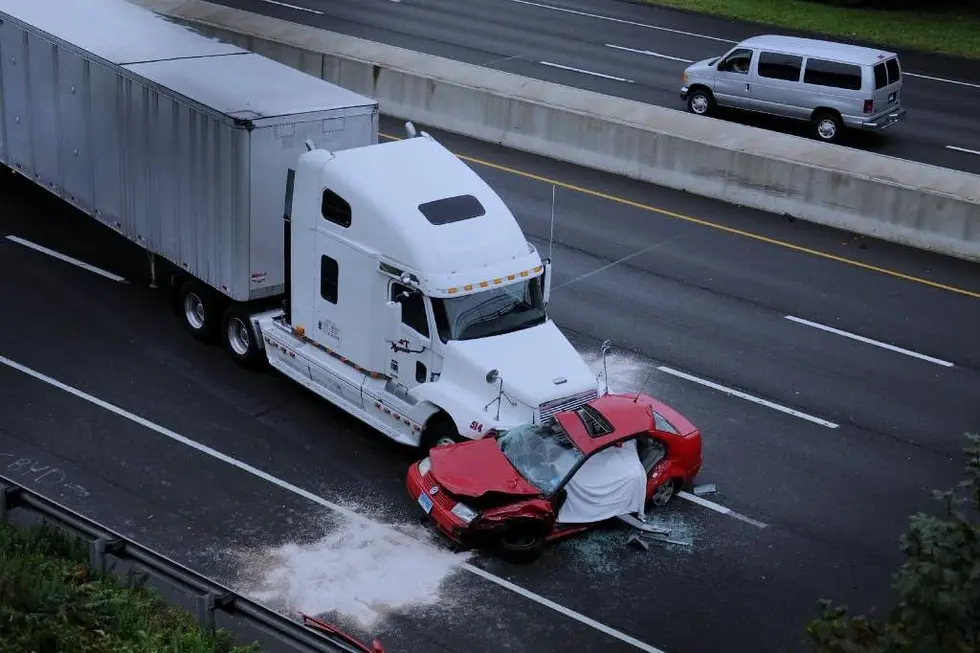
Truck accidents are often far more complicated than ordinary car accidents. A collision involving a semi-truck, tractor-trailer, delivery vehicle, or other commercial truck may involve several companies, insurance policies, and responsible parties.
The truck driver may have caused the crash, but responsibility does not necessarily stop with the person behind the wheel. The trucking company, cargo-loading business, maintenance contractor, vehicle manufacturer, or another driver may also be liable.
Identifying every responsible party is essential because truck accidents frequently cause catastrophic injuries, substantial medical expenses, lost income, permanent disability, and wrongful death.
Why Truck Accident Liability Is Complicated
Commercial trucking operations involve many people and businesses. A single shipment may include:
- A truck driver
- A motor carrier
- The owner of the tractor
- The owner of the trailer
- A freight broker
- A shipping company
- A cargo-loading company
- A maintenance contractor
- A parts manufacturer
- A commercial insurance provider
Each party may have different responsibilities. Determining liability requires examining how the accident happened, who controlled the truck, who employed or contracted with the driver, how the cargo was loaded, and whether the vehicle was properly inspected and maintained.
Federal Motor Carrier Safety Regulations establish minimum safety standards for many interstate motor carriers, commercial vehicles, and drivers. California also maintains commercial licensing and safety requirements that equal or exceed certain federal standards.
The Truck Driver
The truck driver may be liable when careless or unlawful driving causes an accident.
Examples of truck driver negligence include:
- Speeding
- Following too closely
- Running a red light or stop sign
- Making an unsafe lane change
- Failing to check blind spots
- Driving too fast for weather or traffic conditions
- Driving while distracted
- Using a phone while driving
- Driving under the influence
- Falling asleep behind the wheel
- Failing to inspect the truck
- Ignoring mechanical warning signs
- Operating without the proper commercial license or endorsement
Commercial trucks require greater stopping distance than passenger vehicles because of their size and weight. California’s Commercial Driver Handbook emphasizes that total stopping distance includes perception, reaction, and braking distance.
A truck driver who fails to leave adequate space may be unable to stop in time when traffic suddenly slows.
The Trucking Company or Motor Carrier
The trucking company may be responsible for the driver’s conduct and for its own unsafe business practices.
Potential claims against a trucking company may involve:
Negligent Hiring
A trucking company should evaluate whether a driver is properly licensed, medically qualified, trained, and capable of safely operating a commercial vehicle.
The company may be liable if it hires a driver with a history of:
- Serious traffic violations
- Preventable accidents
- Suspended or revoked licenses
- Drug or alcohol violations
- Inadequate training
- Disqualifying medical conditions
- Unsafe commercial driving
Negligent Training
Commercial drivers must understand how to inspect, control, maneuver, and stop large vehicles safely.
A trucking company may be responsible when it allows a poorly trained driver to operate a tractor-trailer, tanker, or specialized commercial vehicle.
Negligent Supervision
Carriers should monitor driver qualifications and safety performance. Warning signs may include repeated speeding citations, logbook violations, customer complaints, failed inspections, or prior preventable collisions.
Ignoring those warning signs may expose the company to liability.
Unsafe Scheduling and Driver Pressure
Trucking companies may create dangerous conditions when they pressure drivers to meet unrealistic delivery deadlines, continue driving while tired, or violate safety requirements.
Federal hours-of-service rules limit how long many commercial drivers may remain on duty and drive without required rest. These rules are intended to reduce fatigue and help drivers remain awake and alert.
A trucking company may share responsibility if it encouraged, required, or knowingly permitted a driver to violate those limits.
Failure to Maintain the Truck
Motor carriers are generally responsible for ensuring that commercial vehicles are regularly inspected, repaired, and maintained.
A company may be liable when an accident is caused by problems such as:
- Worn brakes
- Defective tires
- Broken lights
- Steering problems
- Faulty coupling equipment
- Damaged suspension
- Malfunctioning safety systems
Federal commercial vehicle regulations address inspection, repair, maintenance, driver qualifications, safe operation, vehicle equipment, and hours of service.
Can a Trucking Company Avoid Liability by Calling the Driver an Independent Contractor?
Trucking companies sometimes argue that a driver was an independent contractor rather than an employee.
That label does not automatically eliminate the company’s potential responsibility.
The actual relationship between the parties must be investigated, including:
- Who controlled the driver’s work
- Who assigned the route
- Who set the delivery schedule
- Who owned or leased the truck
- Whose operating authority was used
- Who maintained the vehicle
- Who had the ability to hire, discipline, or remove the driver
For purposes of the Federal Motor Carrier Safety Regulations, the definition of an employee includes an independent contractor while operating a commercial motor vehicle in the course of that work.
The effect of this rule on a civil lawsuit depends on the facts and applicable law, but a carrier cannot necessarily avoid scrutiny simply by describing a driver as an independent contractor.
The Truck’s Owner
The tractor or trailer may be owned by someone other than the trucking company operating it.
A vehicle owner may be responsible when the owner:
- Knowingly allowed an unsafe or unqualified driver to use the truck
- Failed to perform required maintenance
- Ignored known mechanical problems
- Provided an unsafe vehicle
- Failed to inspect the equipment before leasing it
Ownership records, lease agreements, registration documents, maintenance contracts, and operating records may help determine who controlled the vehicle.
The Cargo-Loading Company
Improperly loaded or unsecured cargo can make a truck unstable and difficult to control.
A shipping company, warehouse, loading contractor, or trucking company may be responsible when cargo:
- Exceeds legal weight limits
- Is distributed unevenly
- Is not properly tied down
- Shifts during transportation
- Falls from the truck
- Causes the trailer to tip or jackknife
- Blocks the driver’s view
- Contains hazardous materials that were improperly handled
California’s Commercial Driver Handbook warns that incorrectly loaded or unsecured cargo can create a danger for the driver and other road users.
Liability may depend on who loaded the cargo, who inspected it, and whether the driver had a reasonable opportunity to discover the problem.
A Maintenance or Repair Company
Some carriers outsource inspections, repairs, tire replacement, brake work, and other maintenance to independent contractors.
A repair facility may be liable when negligent work causes or contributes to an accident.
Examples include:
- Improperly repairing brakes
- Installing the wrong parts
- Failing to tighten wheels
- Overlooking dangerous tire damage
- Incorrectly servicing steering components
- Clearing a truck for operation despite an unsafe condition
Maintenance invoices, inspection reports, mechanic notes, work orders, and replaced parts may become important evidence.
The Truck or Parts Manufacturer
A defective truck or component may cause an accident even when the driver and carrier acted reasonably.
Potential defects may involve:
- Brakes
- Tires
- Steering systems
- Coupling devices
- Trailer hitches
- Fuel systems
- Lights
- Airbags
- Seat belts
- Electronic stability controls
- Collision-avoidance technology
The vehicle manufacturer, parts manufacturer, distributor, or seller may be responsible under product liability law when a defective product contributes to a collision or makes the injuries more severe.
Experts may need to inspect the truck and preserve failed components before the vehicle is repaired, sold, or destroyed.
A Freight Broker or Logistics Company
Freight brokers connect shippers with motor carriers. Whether a broker may be held responsible depends heavily on its role and conduct.
Potential issues may include whether the broker:
- Selected a carrier with a poor safety record
- Ignored known safety concerns
- Exercised control over the driver or shipment
- Created an unsafe delivery schedule
- Misrepresented the carrier’s qualifications
- Continued working with a dangerous carrier
Broker liability is legally complex and depends on the specific facts, contracts, and applicable state and federal law.
Another Driver
The commercial truck driver is not always responsible.
A passenger-vehicle driver may cause a truck accident by:
- Cutting in front of the truck
- Driving in the truck’s blind spot
- Braking suddenly
- Making an unsafe lane change
- Entering the highway without yielding
- Driving distracted or impaired
- Losing control and creating an unavoidable hazard
Several motorists may share responsibility for the same collision.
A complete investigation should examine the actions of every involved driver rather than automatically assuming that the truck caused the crash.
A Government Entity
Dangerous public road conditions may contribute to a truck accident.
Examples include:
- Defective traffic signals
- Missing warning signs
- Dangerous road design
- Poorly marked construction zones
- Inadequate lighting
- Large potholes
- Unsafe barriers
- Improperly maintained pavement
A city, county, state agency, or government contractor may potentially be responsible.
Claims against California government entities are subject to special procedural rules and shorter deadlines. Accident victims should speak with an attorney promptly when dangerous public property may have contributed to the collision.
More Than One Party May Be Liable
Truck accidents frequently involve shared responsibility.
For example:
- A fatigued driver may have been speeding.
- The trucking company may have imposed an unsafe schedule.
- A maintenance contractor may have failed to repair the brakes.
- A loading company may have improperly distributed the cargo.
- Another driver may have suddenly cut in front of the truck.
Each party’s conduct should be evaluated separately.
Identifying all responsible parties may also reveal additional insurance coverage that can help compensate an injured person for significant losses.
What Evidence Helps Establish Truck Accident Liability?
Truck accident evidence can disappear quickly. The trucking company may possess much of the information needed to determine what happened.
Important evidence may include:
- The truck’s electronic logging device
- Driver logbooks
- GPS and dispatch records
- The truck’s electronic control module
- Event data recorder information
- Dashcam footage
- Surveillance video
- Driver cellphone records
- Driver qualification records
- Drug and alcohol testing records
- Inspection reports
- Maintenance and repair records
- Brake and tire records
- Cargo documents
- Weight tickets
- Bills of lading
- Employment and contractor agreements
- Delivery schedules
- Company safety policies
- Prior violations and accident history
- Police reports
- Witness statements
- Photographs of the scene and vehicles
Electronic data may be overwritten, and physical evidence may be repaired or destroyed. An attorney can send preservation letters instructing relevant parties to retain evidence connected to the collision.
Common Causes of California Truck Accidents
Truck accidents may result from:
Driver Fatigue
Fatigue can reduce reaction time, judgment, concentration, and awareness.
Hours-of-service regulations limit driving and on-duty time for many commercial drivers, but violations may still occur.
Distracted Driving
A truck driver may become distracted by a phone, dispatch device, navigation system, food, paperwork, or activity outside the vehicle.
Speeding
A fully loaded truck requires substantial time and distance to stop. Excessive speed increases both the likelihood and severity of a collision.
Unsafe Lane Changes
Commercial trucks have large blind spots. Drivers must carefully check mirrors and surrounding traffic before changing lanes or turning.
Improperly Loaded Cargo
Unbalanced or unsecured cargo may cause rollovers, jackknife accidents, falling debris, or loss of control.
Mechanical Failure
Brake failure, tire blowouts, steering defects, and coupling failures may result from poor maintenance, defective parts, or inadequate inspections.
Impaired Driving
Alcohol, illegal drugs, prescription medication, and other substances may impair a commercial driver’s judgment and coordination.
Inadequate Training
An inexperienced or poorly trained driver may not know how to handle steep grades, emergency braking, tight turns, adverse weather, or shifting cargo.
What Should You Do After a Truck Accident?
After a California truck accident:
- Call 911 and request medical assistance.
- Report the collision to law enforcement.
- Seek medical care, even if symptoms initially appear minor.
- Photograph the vehicles, road, skid marks, debris, and injuries.
- Obtain the truck driver’s name, license, insurance, employer, and carrier information.
- Collect witness contact information.
- Avoid admitting fault or giving unnecessary statements.
- Do not sign a settlement or release without legal advice.
- Preserve medical bills, wage records, repair estimates, and insurance communications.
- Contact a truck accident attorney as soon as possible.
Do not allow the truck, trailer, cargo, or damaged components to be destroyed before they can be examined in a serious injury case.
What Compensation May Be Available?
A California truck accident claim may include compensation for:
- Ambulance transportation
- Emergency treatment
- Hospitalization
- Surgery
- Doctor visits
- Physical therapy
- Medication
- Future medical care
- Lost wages
- Reduced earning capacity
- Property damage
- Physical pain
- Emotional distress
- Loss of enjoyment of life
- Permanent disability
- Scarring or disfigurement
When a truck accident results in death, eligible surviving family members may also be able to pursue a wrongful death claim.
What If You Were Partially Responsible?
Being partially responsible does not necessarily prevent you from recovering compensation in California.
Responsibility may be divided among the truck driver, trucking company, another motorist, and other parties. Your potential recovery may be affected by the percentage of responsibility assigned to you.
Do not accept an insurance company’s fault determination without an independent investigation.
Why Trucking Insurance Claims Require Careful Handling
Commercial trucking accidents may involve multiple insurers with substantial financial exposure.
Insurance companies may quickly send investigators to the scene, inspect the vehicles, interview witnesses, and begin building a defense.
They may attempt to:
- Blame another driver
- Minimize the severity of the injuries
- Dispute future medical needs
- Argue that treatment was unnecessary
- Deny that the driver was working for the company
- Withhold important records
- Offer a settlement before the full damages are known
An early settlement may not account for future surgery, continuing treatment, permanent disability, or loss of earning ability.
When Should You Contact a California Truck Accident Lawyer?
Consider contacting an attorney promptly when:
- You suffered a serious injury
- A family member was killed
- A commercial truck or tractor-trailer was involved
- The trucking company disputes responsibility
- Multiple companies were involved
- The truck may have had a mechanical defect
- Improperly loaded cargo contributed to the crash
- The driver may have been fatigued or impaired
- The insurance company requests a recorded statement
- You receive an early settlement offer
- Important electronic or physical evidence may be lost
A truck accident lawyer can investigate the collision, identify every potentially responsible party, preserve records, work with qualified experts, and pursue compensation from the available insurance policies.
Injured in a California Truck Accident?
Truck accident cases require immediate and thorough investigation. Important evidence may be controlled by the trucking company and may not remain available indefinitely.
Royal Law Group, PC represents individuals and families injured in commercial truck accidents throughout Los Angeles and across California.
Our legal team can investigate the truck driver, motor carrier, maintenance history, cargo records, electronic data, and all available insurance coverage. We are prepared to pursue accountability from every party whose negligence contributed to the accident.
Contact Royal Law Group, PC today for a free consultation. You pay no attorney’s fees unless we win your case.
This article is provided for general informational purposes only and does not constitute legal advice. Liability depends on the specific facts of each accident. Speak with a qualified California attorney regarding your circumstances.